What effect do music concert tours have on the local economy?
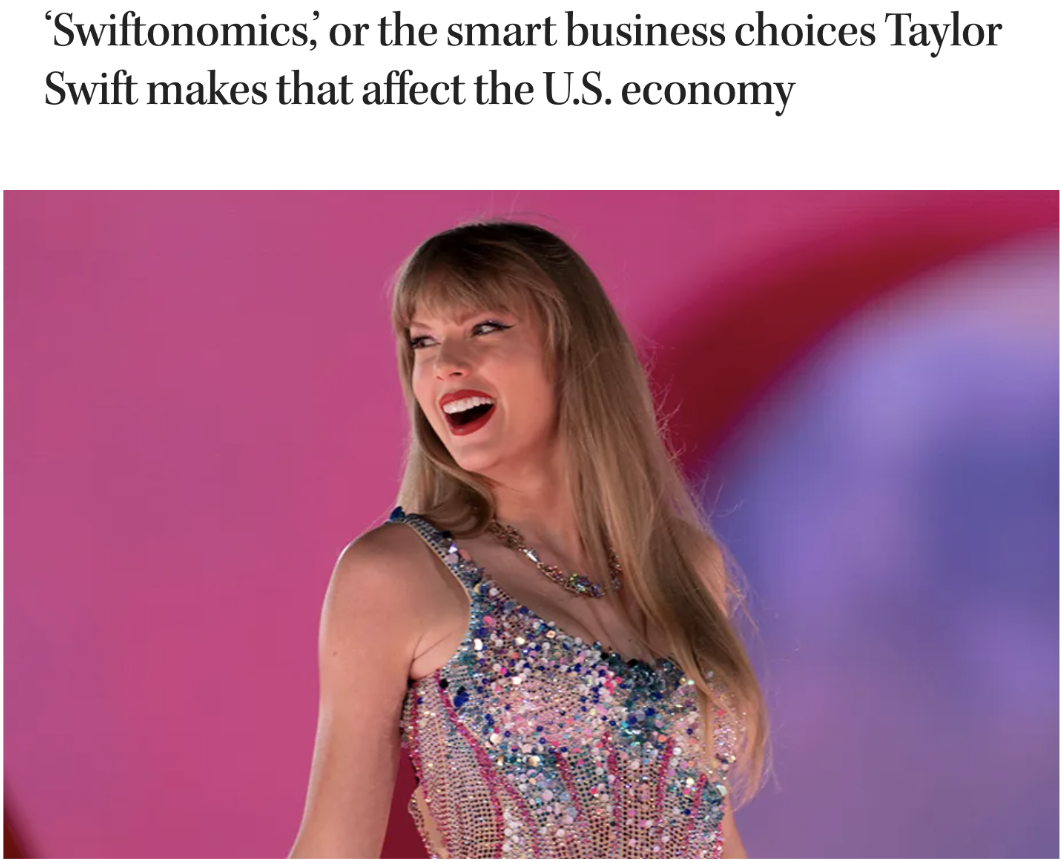
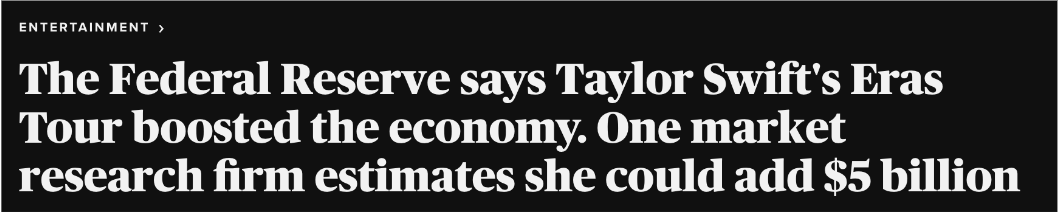
Recent Taylor Swift and Beyoncé tours suggest that large concert tours have a significant impact on the local economy through ticket sales, hotel bookings, etc.
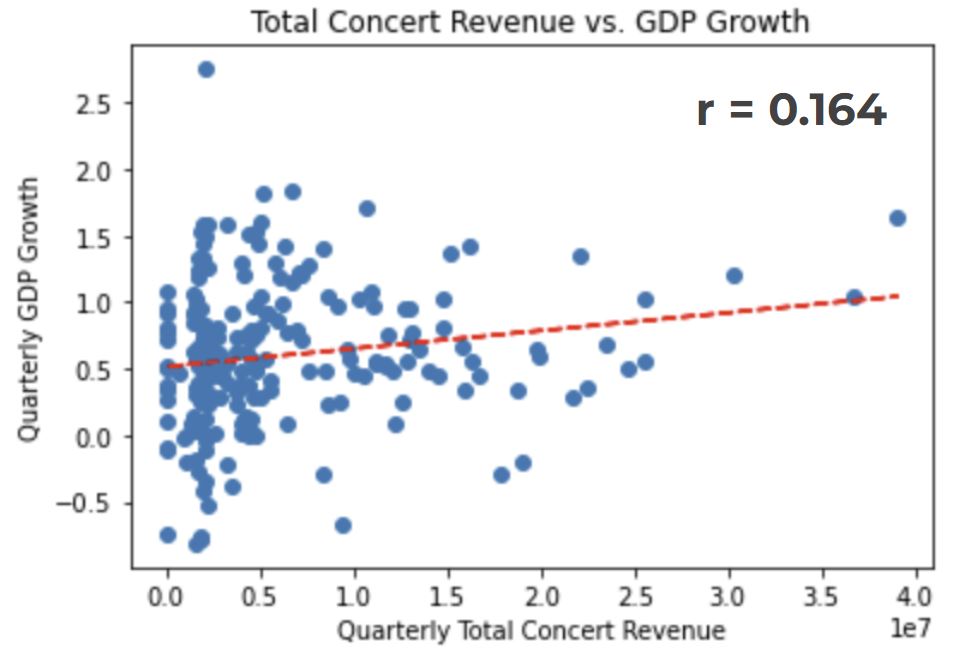
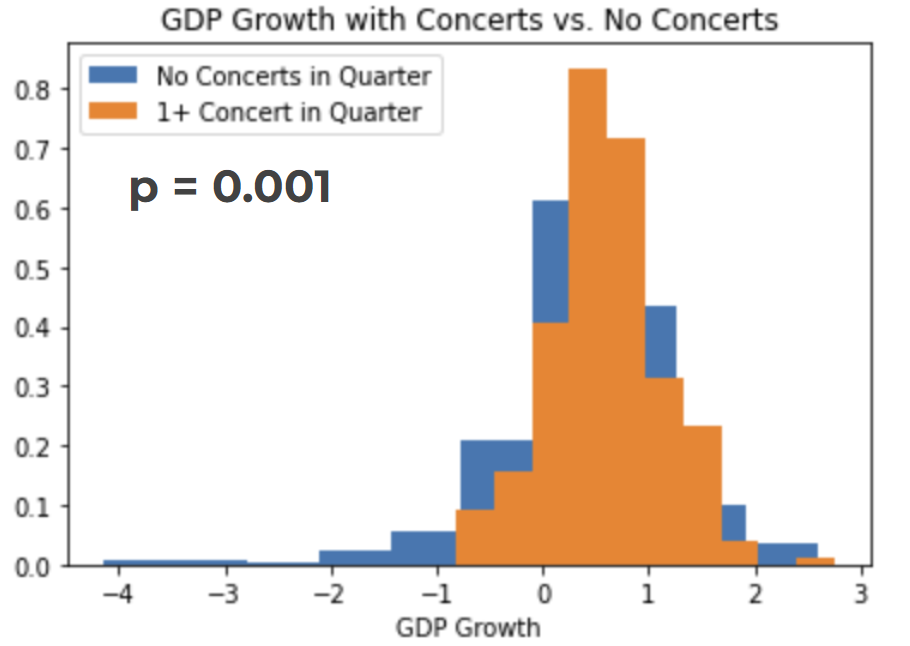
We hypothesize that, because of this economic impact, we can use concert attendance to model local macroeconomic trends (e.g. GDP)
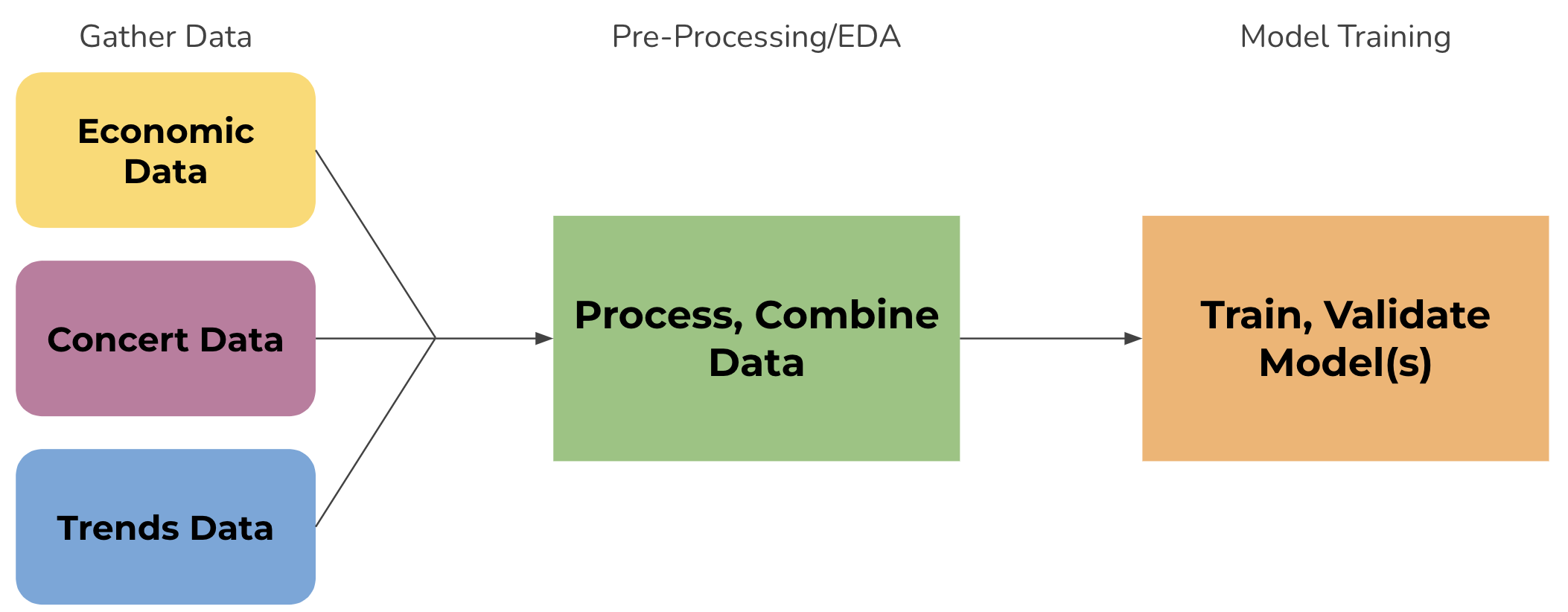
Economic Data
Concert Data


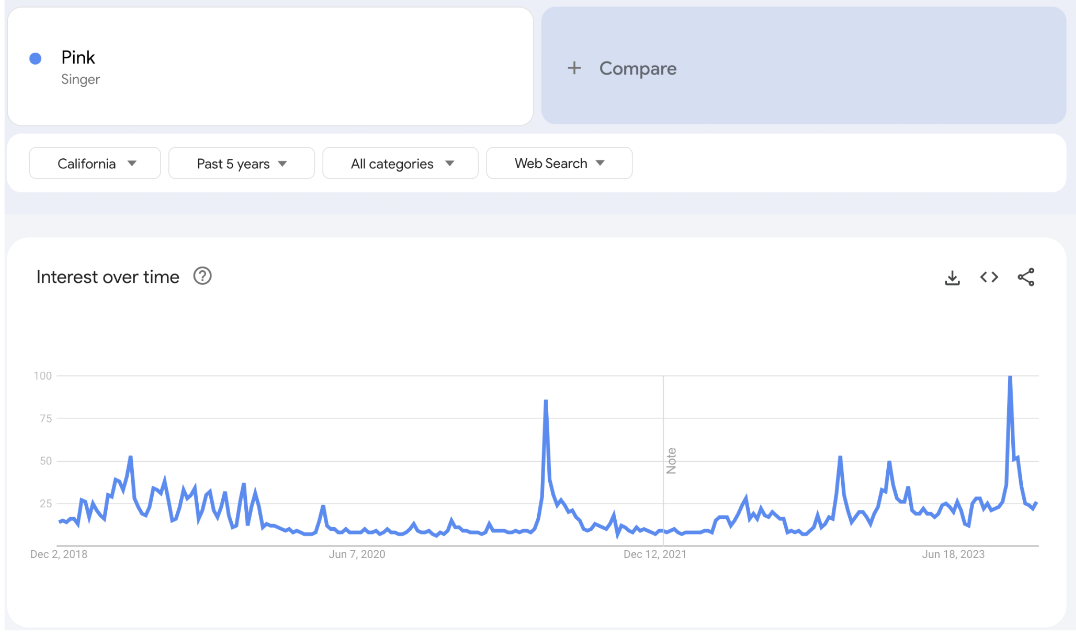
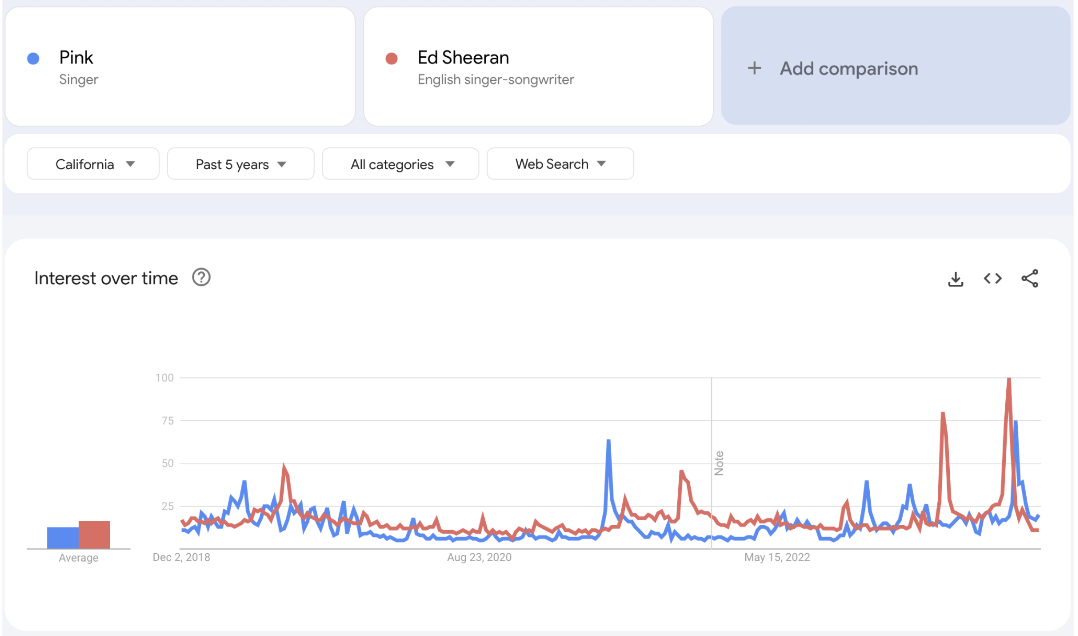
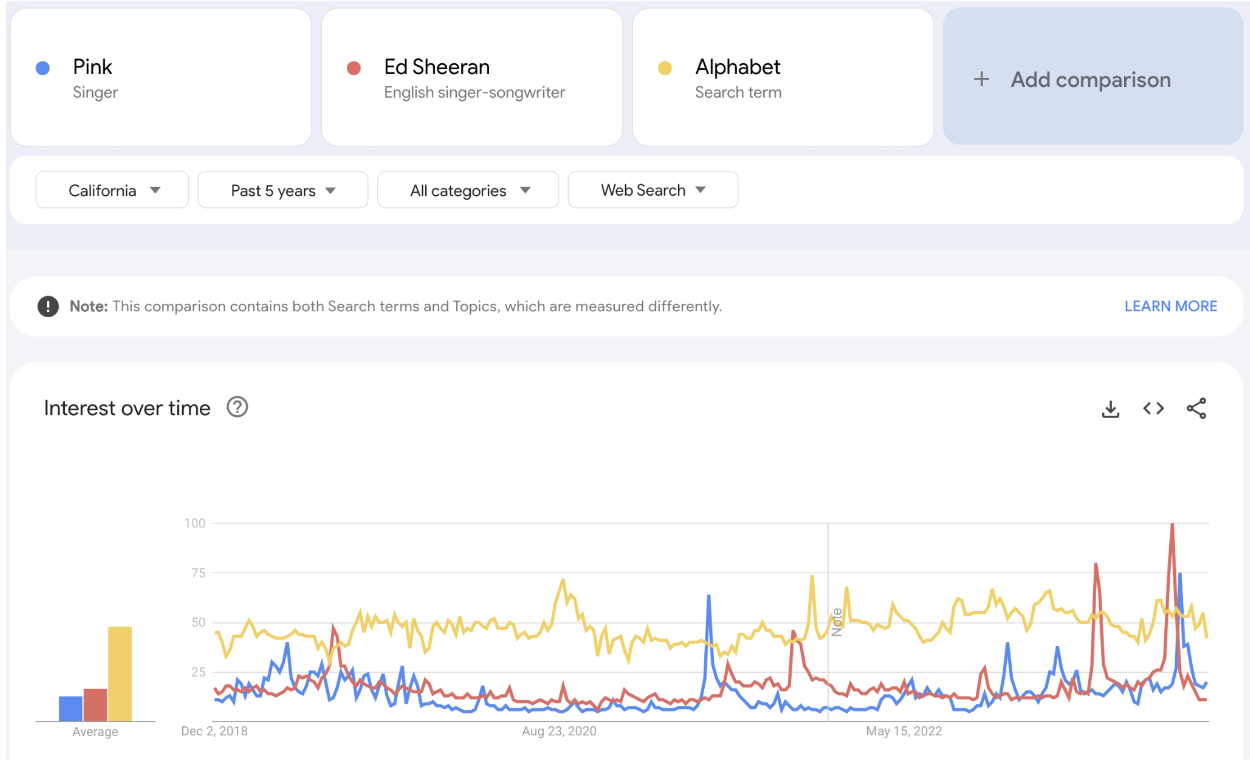
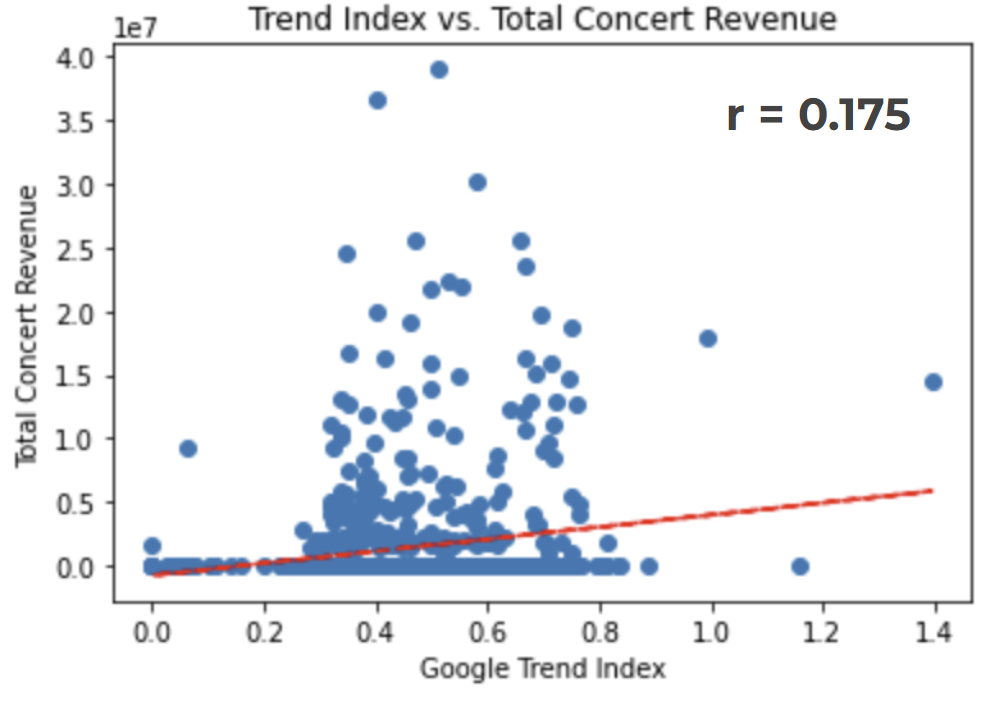
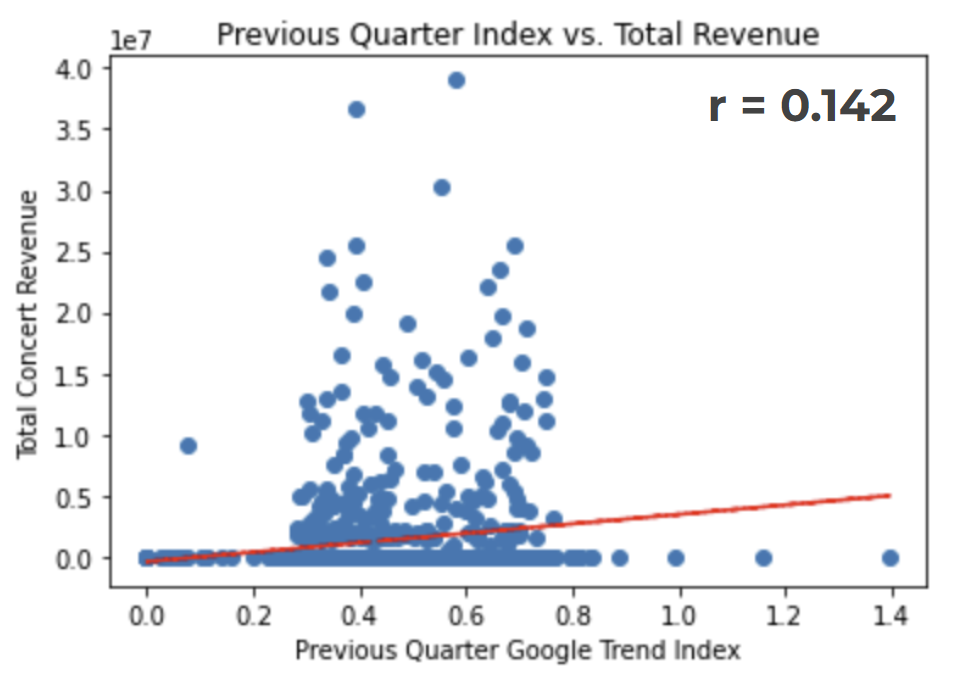
Problem: Google Treds data is relative, not absolute
Solution: Normalize relative values by a common search denominator
Data Granularity: We were limited to GDP data on a state level and on a quarterly time scale
Training Data Size: We limited our concert data to large-scale concert tours between 2015 and 2019 with available attendance and revenue figures (8 concerts)
Confounding Factors: Our research problem lends itself to numerous confounding factors that are difficult to disentangle:
Google Trends vs. Twitter: We originally wanted to use NLP on tweets to extract more fine-grained data
Testing Hypothesis on Post-Pandemic Concerts: We hope to use the Taylor Swift and Beyoncé concert tours as a test set for our models. We postulate that worldwide concert tours after 2020 might have a greater impact on economic trends as economies recover, and concerts stimulate a more disproportionate level of consumer spending compared to before 2020.
Additional/Different Trend Data Sources: Given that tweets provide hyper-local data (e.g. geotags) and a larger quantity of individual data points, better matches between tweet activity and concert attendance can be expected.